
Recovery Services
Blood Flow Restriction (BFR) Training
A cuff is placed high on the arm or leg and inflated to a measured pressure while you perform strengthening exercises with a lighter load than usual. Research suggests this may help you build strength and muscle when heavy lifting is not yet appropriate, such as after surgery. Your clinician decides if it is a fit.
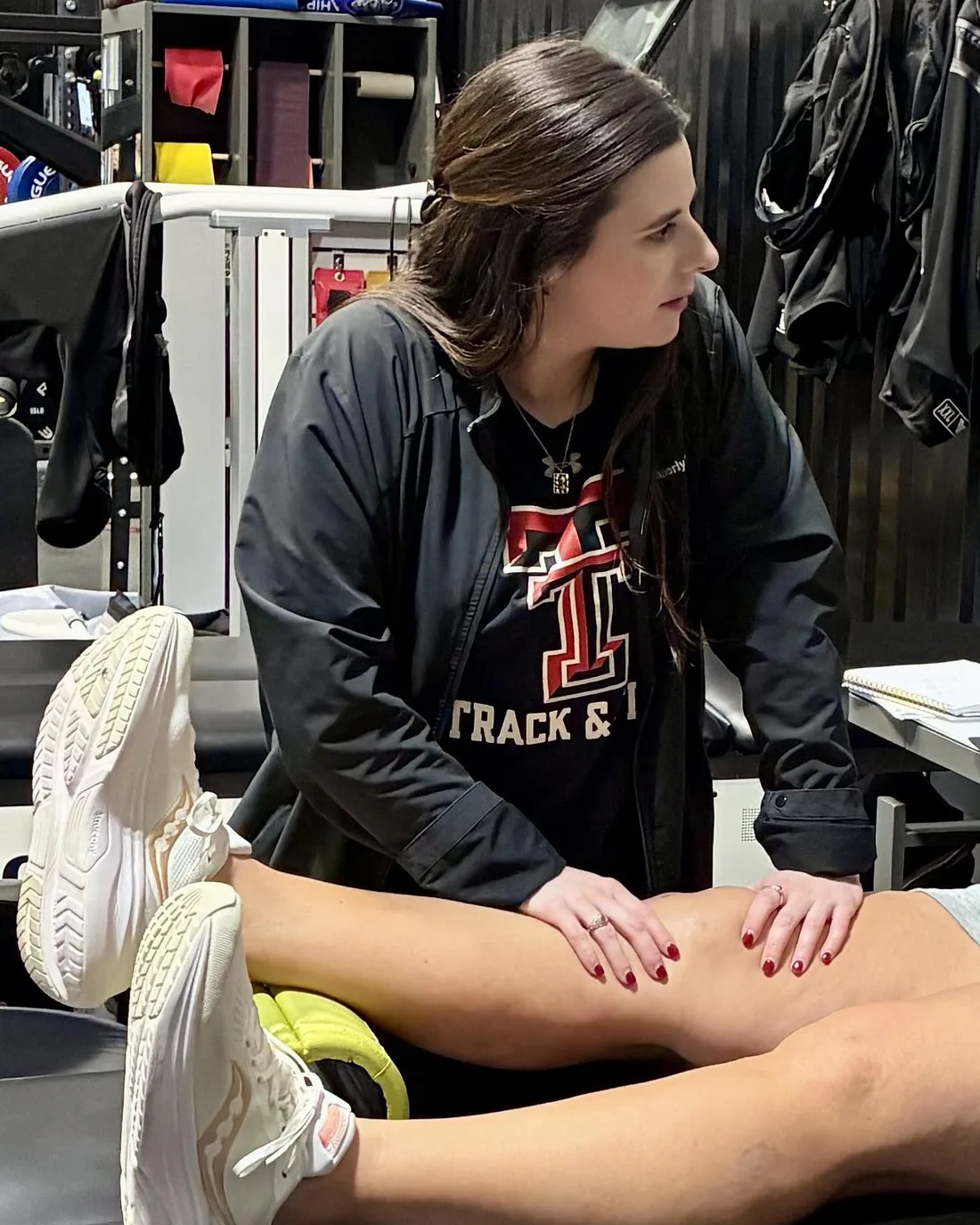
Placeholder. Procedure photo from iTOP Media.
The technique
What it is
Blood flow restriction training, or BFR, is a strengthening method used in rehabilitation. A clinical cuff goes around the upper part of the arm or the upper part of the thigh. It is inflated to a pressure your clinician sets, often based on a measurement for your limb. You then do exercises with a lighter load than you would use for typical heavy strength training.
The cuff limits how easily blood leaves the limb through the veins, while some arterial blood still comes in. The muscle is working in a tighter, more metabolically stressful environment. That is the point of the technique, and it is also why screening and supervision matter.
BFR is a supplement to rehab, not a replacement for eventually returning to regular strength work when you are ready. It is not a tournament shortcut, and it is not used for running or jumping work.
Your clinician will tell you if blood flow restriction training is appropriate and available at your visit. BFR is a supervised technique, used after a screening, not something to copy at home with a random strap.
In plain words
How it works
Heavy strength training is a usual way to build muscle. After surgery or a serious injury, that kind of load may be too much for a healing joint, a graft, or a painful tissue. BFR is used, where appropriate, as a bridge. You work with a lighter load, but the restricted blood flow makes the muscle's environment more like harder work.
In plain words, the muscle has to do those reps with less oxygen available and with metabolic byproducts clearing more slowly. Research suggests that this stress may help support strength and muscle size gains even without heavy external load, which is why BFR is often considered in early and mid-stage rehab, including after knee surgery.
How much it helps varies, and it does not skip the need to progress your program. When heavier loading is safe, your clinician will usually move you in that direction. BFR should not become the entire plan.
Your visit
What to expect
A typical sequence. Your clinician may adjust the order or skip a step based on your exam. There is no fixed script for every visit.
-
Screening comes first
Your clinician reviews your medical history before any cuff goes on. Tell them if you have a known blood clot or a history of one, a clotting disorder, peripheral vascular disease, severe or poorly controlled high blood pressure, sickle cell disease, active infection, cancer, lymphedema or a history of lymph-node removal, kidney disease, or recent surgery or an open wound in the limb. This is not a complete list. Your clinician will decide whether BFR is appropriate.
-
The cuff is placed and pressure is set
A clinical cuff is wrapped high on the arm or thigh. Your clinician sets a training pressure for you, often after measuring the pressure needed for your limb, rather than using a one-size-fits-all tightness.
-
You exercise with a lighter load
You perform the strengthening movement your clinician has chosen, with a lighter load than typical heavy training. The work can feel surprisingly hard. The muscle often burns. That effort is expected. Sharp or unusual pain is not. You can ask to stop at any time.
-
The cuff comes off
When the exercise set is finished, the cuff is deflated and removed. The limb may look flushed or feel temporarily swollen or heavy. That usually settles.
-
The rest of rehab continues
BFR is one exercise method inside your visit. You still have a broader plan: motion, strength, and, when it is part of your care, testing. Your clinician will decide when BFR is useful and when regular loading should take over.
Healing and recovery
How it may help
The main reason clinicians use BFR in rehab is to help you work on strength and muscle size when heavy loading is not appropriate yet. That can matter after ACL or meniscus surgery, after other lower-body procedures, or when pain, swelling, or a healing tissue limits how much load you can take.
Research suggests low-load BFR training may help with strength and muscle mass in these situations, and it may help reduce the loss of muscle that can follow surgery or a stretch of reduced use. It may also let you keep a training stimulus going while a joint is still being protected.
These are possible benefits, not guarantees. BFR is not faster in every case, and it is not a substitute for a complete return-to-sport plan. When you can load normally, that work still matters.
Is this for you?
Who it helps
Athletes and active adults who need to build or keep strength but cannot yet use heavy loads, especially after knee or lower-body surgery, during protected rehab, or when a muscle has lost size after being underused. It may also be considered for some upper-body situations, where appropriate.
It is not for everyone. People with certain vascular, clotting, or medical conditions should not use it. A clinician must screen you and supervise the cuff. It is not a do-it-yourself technique with a belt or wrap from a gym bag.
Please read
Safety and side effects
When a trained clinician uses a clinical cuff, sets an individualized pressure, and screens you first, BFR is generally considered to have a low rate of serious problems. That does not mean it feels easy. Local discomfort during the exercise is very common. Temporary swelling, muscle fatigue, and mild soreness are the usual after-effects and typically settle. Bruising under or near the cuff can happen.
Serious complications are uncommon, but cuff use has inherent risks, which is why pressure, cuff width, and supervision matter. Vascular problems are the main concern in people who already have clotting or circulation issues. A history of a blood clot or a high risk of one is a reason not to use BFR. Unusual, severe, or lasting muscle pain after a session should be reported to your clinician.
Do not use BFR if you have a known blood clot (DVT), a significant clotting disorder, unmanaged severe high blood pressure, significant peripheral vascular disease, sickle cell disease, an active infection in the limb, certain cancers, or other conditions your clinician flags. Tell your clinician about heart, kidney, and circulation history, and about all medications that affect clotting. This is not a complete screening list.
FAQ
Common questions
BFR is a strengthening method that uses a clinical cuff on the upper arm or thigh, inflated to a measured pressure, while you exercise with a lighter load than usual. The cuff limits blood leaving the limb, which makes the muscle work in a more demanding environment. It is supervised and used where appropriate, as part of a rehab plan.
Heavy loads are often delayed after surgery to protect healing tissue. Research suggests that lighter-load exercise with BFR may still help you work on strength and muscle size during that period, which may reduce the loss of muscle that can follow surgery. It is a bridge, not a replacement for regular strengthening once you are ready.
The cuff feels tight. The muscle often burns and fatigues faster than you would expect from a light weight. The limb may look flushed or feel temporarily heavy or swollen afterward. Sharp or unusual pain is not expected. Tell your clinician if you need the pressure reduced or the cuff taken off.
It is generally used safely when a clinician screens you, uses a clinical cuff, and sets a pressure for your limb. Discomfort during the exercise is common, and mild soreness, temporary swelling, or bruising can follow. Serious problems are uncommon but are the reason medical screening matters. BFR should not be copied at home with an ordinary strap.
Tell your clinician if you have a known blood clot or a history of one, a clotting disorder, peripheral vascular disease, severe high blood pressure, sickle cell disease, active infection, cancer, lymphedema, kidney disease, or an open wound in the limb. Your clinician will review your history and decide whether BFR is appropriate.
No. It is used when heavy loading is not appropriate yet, or as a supplement. As you progress, your plan typically moves toward ordinary strength work. BFR does not replace a full physical therapy program, return-to-sport testing, or your surgeon's protocol when those apply.

Next Step
Start with Assess.
An evaluation at our Lubbock, Colleyville, or Irving clinic. Personalized care focused on recovery, strength and performance. Wear comfortable clothes you can move in. Insurance at Colleyville and Irving; cash pay at all three clinics.