
Dry Needling
Thin filament needles used on tight muscle, as part of a physical therapy plan.
Learn moreRecovery care
Hands-on and clinic-based recovery care, used where appropriate, as part of a physical therapy plan. These pages explain what each technique is, what it feels like, and how it may help you heal and get back to training. Your clinician starts with an exam and decides what fits.
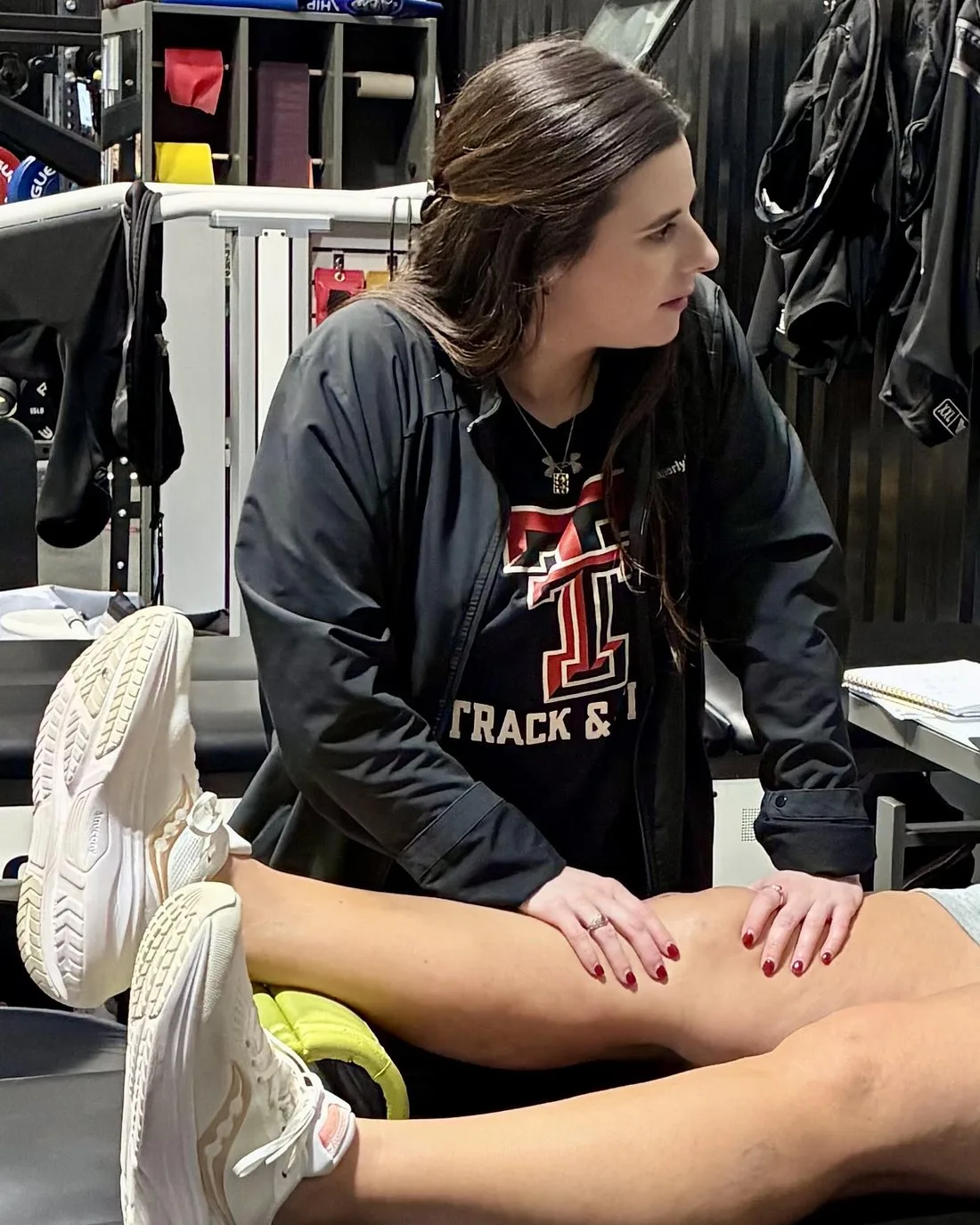
Placeholder. Procedure photo from iTOP Media.
The techniques
Each page explains the procedure, how it may help healing and recovery, what it feels like, and who should be cautious. Your clinician chooses what is appropriate. These are not a menu you order from on your own.
Thin filament needles used on tight muscle, as part of a physical therapy plan.
Learn moreDry needling with a gentle electrical current through the needles.
Learn moreA current through pads on the skin that may help with pain or muscle activation.
Learn moreLow-load strengthening with a cuff that limits blood flow leaving the limb.
Learn moreHands-on work with stainless-steel tools to help tight or restricted soft tissue.
Learn moreClinician-guided stretching to help you move more freely.
Learn moreAlso in clinic
These two are already covered in our FAQ. The short versions are below, with a link to the full questions.
Cups and suction are used on the skin to lift tight soft tissue. The suction may increase blood flow to the area and can help tissue move more freely. Circular red or purple marks are common and usually fade over a week or two. Cupping is typically combined with movement, and it is available at all three iTOP clinics. Read the full questions and answers on our FAQ page.
Cupping questions in the FAQNormatec is a dynamic air-compression system. Inflatable boots or sleeves inflate and release in a sequence that may support circulation and help with the feeling of soreness or heaviness after training. It is a recovery tool, not a treatment that replaces physical therapy for an injury. Normatec is at our Lubbock and Colleyville clinics. Irving does not have Normatec, force plates, or 1080 systems. Read the full questions and answers on our FAQ page.
Normatec questions in the FAQDry needling, cupping, IASTM, and assisted stretching are available at Lubbock, Colleyville, and Irving. Normatec and localized cryotherapy are at Lubbock and Colleyville only. Irving does not have Normatec, force plates, or 1080 systems. Ask your clinician about electrical stimulation and blood flow restriction at your clinic. Lubbock is cash pay only. Colleyville and Irving take insurance and also offer cash-pay options.
Your plan
Recovery techniques are tools inside a physical therapy plan, not a substitute for an evaluation. Your clinician starts with your history, how you move, and what you want to get back to, then chooses care that may help, where appropriate. You can always ask questions and decline a technique.
Most of these methods are used along with exercise. The aim is to help you move better, feel more comfortable, and complete the work that actually rebuilds strength and capacity for your sport. Testing at our Lubbock and Colleyville clinics, and clinical return-to-play testing at all three, is how we measure whether that work is landing.
Next Step
An evaluation at our Lubbock, Colleyville, or Irving clinic. Personalized care focused on recovery, strength and performance. Wear comfortable clothes you can move in. Insurance at Colleyville and Irving; cash pay at all three clinics.
