
Recovery Services
Electrical Stimulation (E-Stim) Therapy
A clinical device delivers a controlled electrical current through adhesive pads on your skin. Depending on the settings, e-stim may be used to help with pain, or to help a muscle contract when it is weak or inhibited. It is used where appropriate, as part of your physical therapy plan.
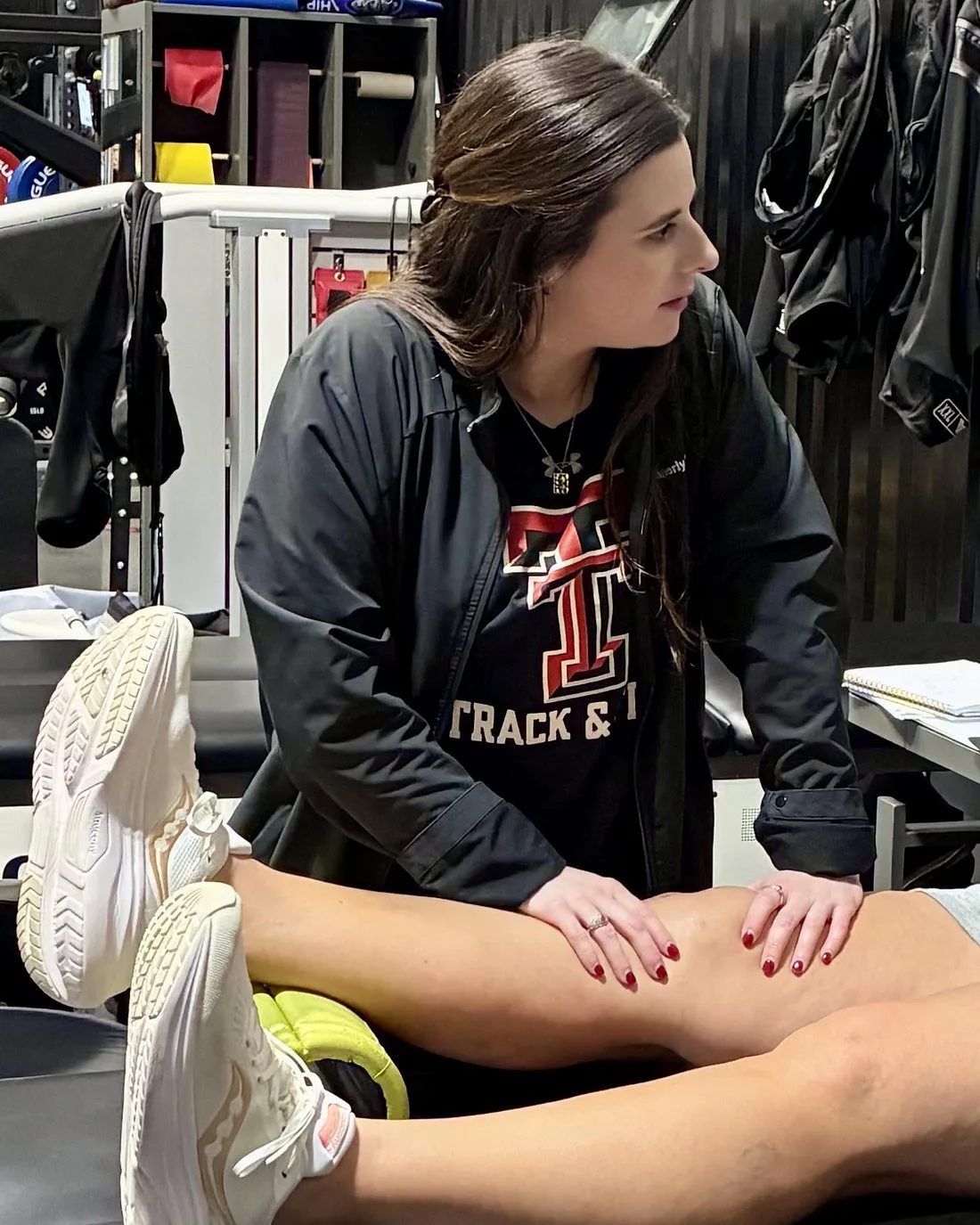
Placeholder. Procedure photo from iTOP Media.
The technique
What it is
Electrical stimulation, or e-stim, uses a small clinical unit and adhesive electrode pads placed on the skin. The unit sends a mild current into the tissue underneath. You are not getting an electric shock in the everyday sense of that word. The feeling is usually a tingling, buzzing, or a muscle twitch, and the intensity is under your clinician's control.
Two common uses in physical therapy are worth telling apart, in plain words. One is sensory stimulation, often called TENS (transcutaneous electrical nerve stimulation). It is used to help with pain. The current is set so you feel it, but a strong muscle contraction is not the goal. The other is neuromuscular electrical stimulation, or NMES. It is set so the muscle actually contracts. That can help a muscle fire when it is weak, inhibited, or hard to activate after injury or surgery.
Your clinician chooses the type, the pad placement, and the settings based on your exam. E-stim is a tool inside a visit, not a treatment you pick off a menu, and not a replacement for exercise.
Your clinician will tell you if electrical stimulation is appropriate and available at your visit. This page describes e-stim with pads on the skin, which is different from dry needling with electrical stimulation.
In plain words
How it works
For pain, two ideas are commonly used to explain TENS. The current may compete with pain signals traveling through the nervous system, which can change how much pain you notice. It may also encourage your body to release its own pain-relieving chemicals. Researchers are still studying exactly how this works, and people differ in how much relief they feel and how long it lasts.
For muscle activation, NMES stimulates the nerve that tells a muscle to contract. The muscle tightens even if you are not trying to squeeze it, though your clinician may also ask you to join in. After surgery or a stretch of reduced use, a muscle can be quiet or hard to find. A prompted contraction may help you reconnect with it and may support strength work when heavy loading is not yet appropriate. Research on NMES suggests it may help with muscle impairment when it is used as part of a broader plan.
In either case, e-stim is supporting the work you do, not doing the rehab for you.
Your visit
What to expect
A typical sequence. Your clinician may adjust the order or skip a step based on your exam. There is no fixed script for every visit.
-
Screening
Your clinician reviews your history. Tell them if you have a pacemaker, implanted defibrillator, or other implanted electrical device, if you are pregnant, if you have a heart condition, epilepsy, a known blood clot, cancer, a bleeding disorder, or reduced sensation or broken skin in the area. These can affect whether e-stim is appropriate.
-
Pads are placed
The skin is clean and dry. Adhesive pads are placed over or near the area being treated, along the muscle or nerve pathway your clinician is targeting. Pads are not placed on broken, irritated, or recently shaved skin, or over the front of the neck, the eyes, or other areas your clinician will avoid.
-
The current is turned up slowly
The unit is started at a low level and raised until the feeling is strong but comfortable. For pain settings, that is usually a tingling or buzzing. For muscle settings, you will feel and see the muscle contract. You can ask for a change at any time.
-
It is used as part of the visit
You may rest during sensory stimulation, or you may be asked to move or contract along with a muscle setting. When that portion is done, the unit is turned off and the pads are removed. The rest of your visit, including exercise, continues as planned.
-
Afterward
The skin may look a little pink where the pads were. Mild muscle fatigue can follow a contraction session. Contact the clinic if you have a lasting rash, a burn-like mark, or pain that feels unusual.
Healing and recovery
How it may help
E-stim may help with short-term pain relief during or after a session, which can make it easier to move and to complete your exercises. Relief varies. For some people it lasts a while after the unit is off. For others it fades sooner. It is not a cure for the underlying injury.
When the goal is muscle activation, e-stim may help you recruit a muscle that has been quiet after surgery, swelling, or pain, such as the quadriceps after a knee procedure. That may support the strength work that helps you recover. Research suggests NMES may help with muscle impairment when it is combined with a full rehabilitation plan.
E-stim does not replace progressive strengthening, movement practice, or, when you are ready, the testing we use to measure progress.
Is this for you?
Who it helps
Athletes and active adults who have pain that is limiting movement, or a muscle that is hard to activate after injury or surgery. It is often considered during post-operative rehab, around a knee, ankle, or shoulder, and as a comfort tool during a physical therapy visit, where appropriate.
It may also be used alongside care for tendon or muscle injuries when pain is making it hard to load the tissue. Your clinician decides. It is not used on everyone, and it is not required for a good outcome.
Please read
Safety and side effects
E-stim is widely used in physical therapy and is generally well tolerated when a clinician sets it and screens you first. The most common issues are skin irritation or a rash from the adhesive, an uncomfortable tingling if the intensity is too high, and muscle soreness after a contraction session. Burns under the pads are uncommon when pads are in good condition and placed on intact skin.
E-stim is typically avoided if you have a pacemaker or implanted defibrillator, and it should be discussed with your clinician if you have another implanted electrical device, a heart condition, epilepsy, a known blood clot, cancer, or a bleeding disorder. It is used with caution in pregnancy. Pads are not placed over open wounds, infected or damaged skin, areas of numbness, the front or side of the neck, the eyes, or over a known tumor. Tell your clinician about all of these.
If your skin becomes irritated, the pads come off and the technique is stopped. Your clinician can choose a different approach.
FAQ
Common questions
E-stim is a controlled electrical current delivered through adhesive pads on your skin. Depending on the settings, it may be used to help with pain, or to help a muscle contract. It is used where appropriate, as part of a physical therapy visit, and your clinician sets the intensity so it feels strong but comfortable.
TENS is a sensory setting used to help with pain. You typically feel a tingling or buzzing, and a strong muscle contraction is not the goal. Neuromuscular electrical stimulation (NMES) is set so the muscle actually contracts, which may help with activation and strength work when a muscle is weak or inhibited. Your clinician chooses which to use.
Most people feel a tingling, buzzing, or tapping. On a muscle setting, you will also feel the muscle tighten and relax. It should not feel like a sharp shock. If it is uncomfortable, tell your clinician and they can turn it down, move the pads, or stop.
It may help with short-term pain, which can make movement more comfortable. On a muscle setting, it may help you activate a muscle that has been quiet, such as the quadriceps after a knee surgery, as part of a larger rehab plan. It does not replace exercise, and results vary from person to person.
Tell your clinician if you have a pacemaker or other implanted electrical device, if you are pregnant, if you have a heart condition, epilepsy, a known blood clot, cancer, a bleeding disorder, reduced sensation, or broken or irritated skin in the area. Your clinician will decide whether e-stim is appropriate.
No. At iTOP, e-stim is a tool inside a physical therapy plan. The plan still centers on your exam, your exercises, and, when it is part of your care, testing to measure progress. Your clinician will decide if and when to use it.

Next Step
Start with Assess.
An evaluation at our Lubbock, Colleyville, or Irving clinic. Personalized care focused on recovery, strength and performance. Wear comfortable clothes you can move in. Insurance at Colleyville and Irving; cash pay at all three clinics.