
Recovery Services
Dry Needling for Athletes
A physical therapy technique that uses thin, sterile filament needles on tight areas of muscle, often called trigger points. It is used where appropriate, as part of a plan that also includes exercise and other hands-on care.
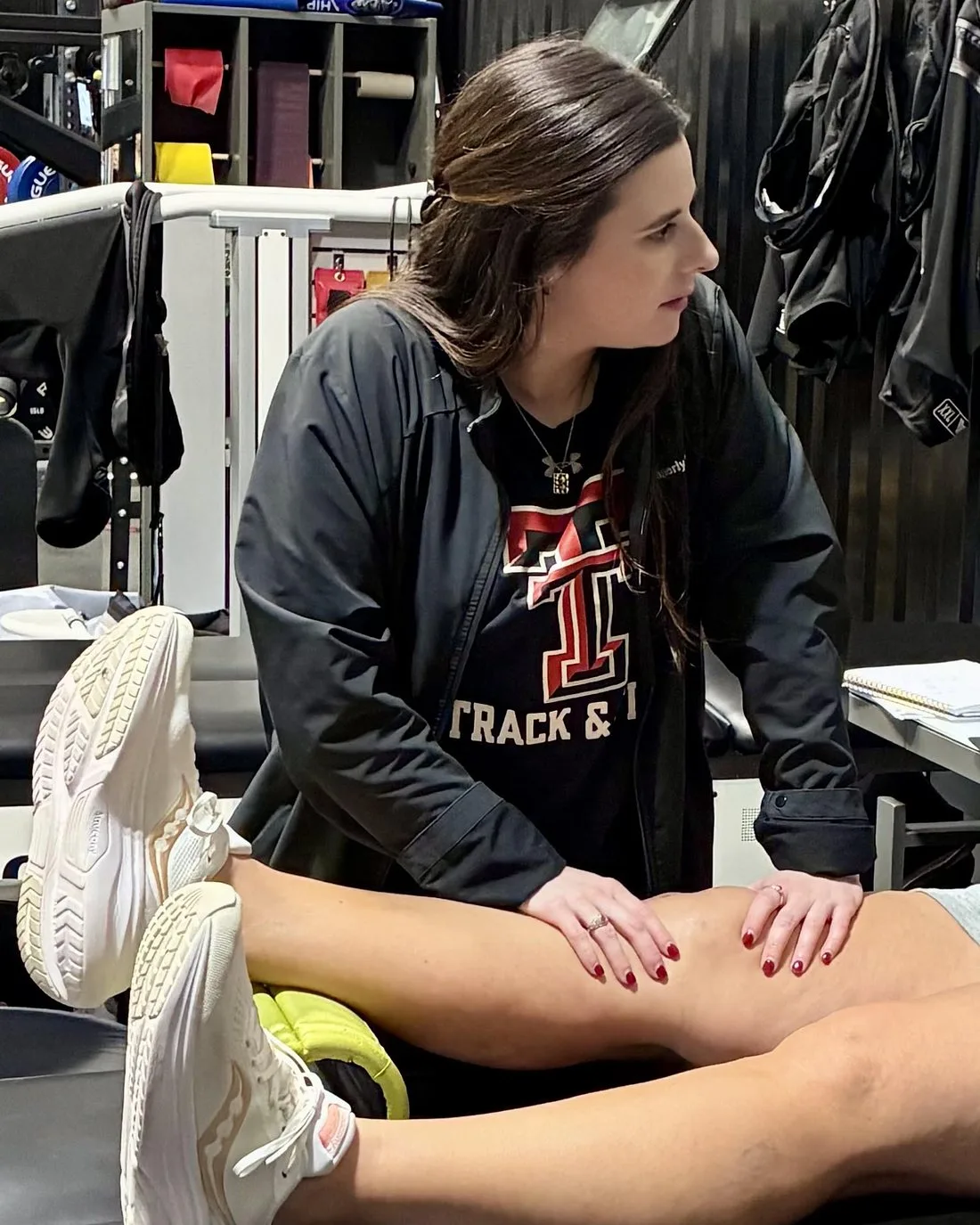
Placeholder. Procedure photo from iTOP Media.
The technique
What it is
Dry needling is a physical therapy technique. Your clinician places a thin, solid filament needle into a tight area of muscle. The needle is "dry," which means nothing is injected. No medication goes through it.
Those tight, irritable spots are often called trigger points. They can feel like a knot, they can limit how far you move, and they can refer a dull ache to nearby areas. A needle can reach a point that is harder to treat with hands alone.
Dry needling is not acupuncture. Both use thin needles, but they are different practices. Dry needling is based on Western anatomy. It targets muscle and trigger points to help with movement and pain. Acupuncture is a traditional Chinese medicine practice that uses points along meridian pathways. At iTOP, dry needling is used as part of a physical therapy plan, not as acupuncture.
It is a tool, not a plan on its own. Your clinician starts with an exam and your goals, then decides whether needling fits that day's work.
Dry needling is available at all three iTOP clinics: Lubbock, Colleyville, and Irving. Several of our clinicians are certified in the technique. In Texas, licensed physical therapists may use dry needling when they are trained and competent in it. Your clinician will decide whether it is right for you.
In plain words
How it works
In plain words, a trigger point is a patch of muscle that has stayed tight and irritable. That tightness can change how the muscle fires and how the nerves in the area send pain signals.
Placing a needle in that spot may prompt a brief twitch, a quick contraction and release. Research suggests that this may help the muscle relax, may ease local pain, and may improve how that muscle and the nerves around it work together. It may also increase local blood flow.
The aim is practical. If a muscle is less guarded, it is often easier to move, strengthen, and complete the exercise that actually helps you recover. Dry needling may help with muscle tension, pain, and range of motion, where appropriate. It does not replace loading, skill work, or time.
Your response is individual. Some people feel a change in tightness right away. Others notice it more the next day, once soreness settles. Your clinician will watch how you respond and decide whether to use it again.
Your visit
What to expect
A typical sequence. Your clinician may adjust the order or skip a step based on your exam. There is no fixed script for every visit.
-
Exam and consent
Your clinician reviews your history, checks the area, and explains what they recommend. You can ask questions and decline the technique. Tell them if you are pregnant, take blood thinners, have a bleeding or clotting disorder, have a weakened immune system, recently had surgery, or have a strong fear of needles.
-
The needle is placed
The skin is cleaned. A thin, sterile, single-use needle is placed into the target muscle, often with a small guide tube. Nothing is injected. You may feel a brief prick, pressure, or very little as it enters, because the needle is very thin.
-
A twitch or ache can happen
When the needle reaches a trigger point, the muscle may twitch. That can feel like a quick cramp or ache. This is a common response, not a requirement for the technique to be useful. Tell your clinician if anything feels like more than you can tolerate.
-
The needle comes out, the plan continues
The needle is removed and placed in a medical sharps container. Your visit then continues with movement, stretching, or strengthening, where appropriate. Dry needling is used along with that work, not instead of it.
-
After you leave
Mild soreness, tightness, or a small bruise at the site is common and usually settles within a day or so. Keep moving and follow any exercise your clinician gives you. Drink water and go about normal activity as advised. Contact the clinic if you have unusual pain, swelling, shortness of breath, or signs of infection.
Healing and recovery
How it may help
Research suggests dry needling may help reduce muscle tension and improve pain control, and it may help with range of motion. For an athlete, that can mean a calf, hamstring, shoulder, or back muscle that is less guarded, so you can train the movement you actually need.
It may also help the way nerves and muscles interact, which can make it easier to get back to active rehab. That matters after a strain, during a season when tightness keeps returning, or when a muscle has been protecting an area after surgery.
Benefits are not guaranteed, and dry needling is not a cure. It is one option inside a plan. The lasting work is still how you move, how you load the tissue, and how you build capacity for your sport.
Is this for you?
Who it helps
Athletes and active adults who have muscle tightness, trigger-point pain, or limited motion that is getting in the way of training or daily life. It may be part of care for a hamstring strain, a calf or Achilles problem, shoulder tightness, neck or back muscle pain, or muscle guarding after an injury.
It may also be used, where appropriate, alongside rehab after surgery, once your clinician decides the tissue is ready. Medical clearance and your surgeon's protocol still come first when those apply.
Please read
Safety and side effects
When a trained clinician uses sterile, single-use needles, dry needling is generally considered a low-risk technique. The most common effects are temporary soreness, stiffness, or a small bruise. Some people feel tired or briefly lightheaded. A tiny drop of blood at the site can happen.
Serious problems are rare. Infection is uncommon when standard precautions are used. If needling is done near the chest or upper back, a collapsed lung (pneumothorax) is a very rare risk. If you have unusual pain, swelling, bleeding that does not stop, or shortness of breath after treatment, contact the clinic or seek urgent care.
Dry needling is not right for everyone. Tell your clinician if you are pregnant, take blood thinners, have a bleeding or clotting disorder, have a weakened immune system, recently had surgery, have an infection or open wound in the area, or have a strong fear of needles. Your clinician will review your history and decide whether it is appropriate.
FAQ
Common questions
A trained clinician places thin, sterile filament needles into tight areas of muscle, often called trigger points. The needle may cause a brief twitch, which can help the muscle relax. Research suggests dry needling may help with muscle tension, pain, and range of motion, where appropriate. Your clinician will decide whether it fits your plan.
Both use thin needles, but they are different practices. Dry needling is a physical therapy technique based on Western anatomy, and it targets tight muscle and trigger points to help with movement and pain. Acupuncture is a traditional Chinese medicine practice that uses points along meridian pathways. At iTOP, dry needling is used as part of a physical therapy plan, not as acupuncture.
You may feel a brief prick as the needle goes in, and a quick muscle twitch can feel like a cramp or ache. Many people feel little as the needle enters, because it is very thin. Some soreness afterward is common. Tell your clinician if anything feels like more than you can tolerate.
Temporary soreness, tightness, or a small bruise at the needle site is common, and it usually settles within a day or so. Keep moving and follow any exercise your clinician gives you. Contact the clinic if you have unusual pain, swelling, shortness of breath, or signs of infection.
Tell your clinician if you are pregnant, take blood thinners, have a bleeding or clotting disorder, have a weakened immune system, recently had surgery, or have a strong fear of needles. Your clinician will review your history and decide whether dry needling is appropriate.
Dry needling is used along with exercise and other hands-on care, where appropriate, not as a stand-alone treatment. The goal is to help you move better as part of a full plan. Your clinician will decide how it fits with the rest of your visit. There is no set schedule for how often it is used.

Next Step
Start with Assess.
An evaluation at our Lubbock, Colleyville, or Irving clinic. Personalized care focused on recovery, strength and performance. Wear comfortable clothes you can move in. Insurance at Colleyville and Irving; cash pay at all three clinics.