
Cupping
Suction lifts the skin and soft tissue away from the muscle underneath. The cups can stay still or glide, and you can move while they are on.
Recovery Services
Cups and gentle suction lift tight soft tissue so a sore, guarded muscle may move more freely. At iTOP, cupping is a physical therapy technique, typically paired with movement and exercise. It is available at all three iTOP clinics.
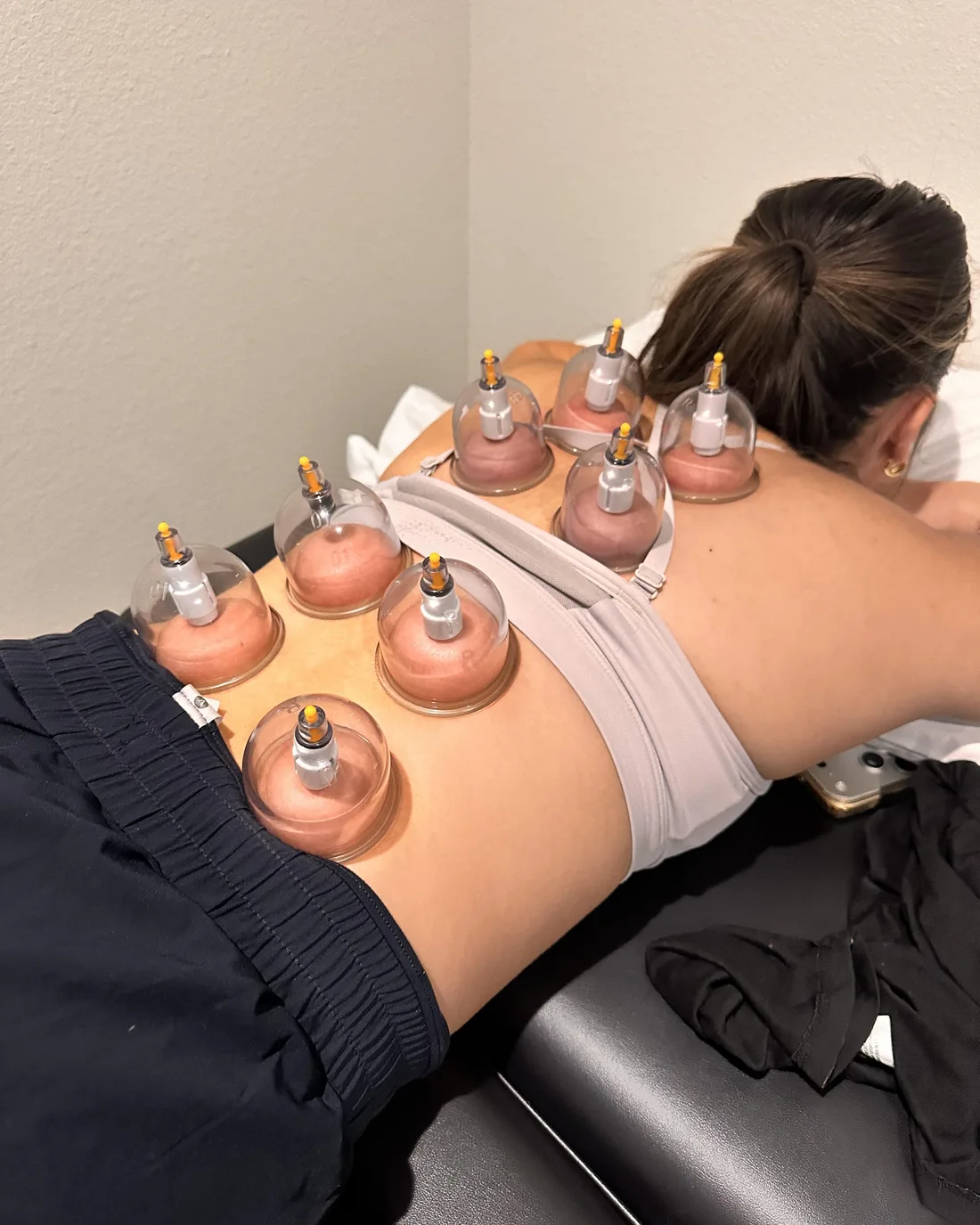
The technique
Cupping is a hands-on technique in which cups are placed on the skin and suction is used to gently lift the skin and the soft tissue underneath. At iTOP we use clear cups with a small hand pump, or soft silicone cups that you squeeze to create suction. There is no heat and no needle.
Physical therapists usually use cupping in two ways. Static cupping means the cups stay in place on a tight area while you rest, or while you slowly move the joint underneath them. Moving cupping, also called dynamic or myofascial cupping, means your clinician applies a lotion and glides a cup along the muscle. Some visits use one, some use both.
You may have heard of fire cupping, which heats a glass cup with a flame, or wet cupping, which involves small cuts in the skin. Those come from traditional practices. iTOP does not use either one. Our cupping is a physical therapy technique, used where appropriate, inside a plan built around your exam and your goals.
Cupping is available at all three iTOP clinics: Lubbock, Colleyville, and Irving. Your clinician will decide whether it is appropriate for you.
In plain words
Most hands-on care presses into the body. Cupping does the opposite: the suction pulls up and gently decompresses the skin, the connective tissue around the muscle (fascia), and the muscle near the surface. That is why some clinicians call it myofascial decompression.
That lift may increase local blood flow and may change how the area feels, so a tight, guarded muscle can relax and move a little more freely for a while. Research suggests cupping may help with short-term pain and muscle tightness for some people. The overall evidence is limited and mixed, and studies do not agree on how much of the effect comes from the tissue itself and how much from how the nervous system responds to the stimulus. So we describe it carefully: it may help, it is not guaranteed, and it does not replace exercise.
Where cupping tends to be most useful is the window right after. If an area feels looser and less sore, that is a good time to stretch, strengthen, and practice the movement your sport asks of you.
Side by side
Cupping, IASTM, and massage can all target tight soft tissue. The difference is mostly in how the force is applied. Your clinician may use one, combine them, or choose something else.
Suction lifts the skin and soft tissue away from the muscle underneath. The cups can stay still or glide, and you can move while they are on.
Your clinician presses into the tissue with a smooth stainless-steel tool, using targeted strokes. It is often used on tendons and on specific spots of restriction. More about IASTM.
Hands press, knead, and glide over the muscle. It works by compression, and your clinician can feel and adjust the pressure as they go.
Your visit
A typical sequence. Your clinician may adjust the order or skip a step based on your exam. There is no fixed script for every visit.
Your clinician checks the area and reviews your history first. Tell them if you take blood thinners, have a bleeding or clotting disorder, are pregnant, have had a blood clot or recent surgery, have a pacemaker or other implanted device, or have a rash, wound, sunburn, or fragile skin where the cups would go.
You will be positioned so the muscle is easy to reach, and the skin needs to be clean and uncovered. For moving cupping, a light lotion or oil is applied so the cup can glide.
Each cup is placed on the skin and the suction is set. You will feel the skin lift and a firm pulling or tightness. It should be tolerable, not sharp. Your clinician may leave the cups in place, ask you to move under them, or glide a cup along the muscle. Say so at any point if you want less suction.
Your clinician releases the suction and lifts each cup off. Round red or purple marks are common where the cups were. Your clinician checks your skin and how the area moves.
Cupping is typically followed by stretching, strengthening, or the movement you are working on. That pairing is the point. The cups are meant to support the exercise, not replace it.
The marks usually fade over a week or two. They come from the suction drawing blood toward the surface into small vessels near the skin, not from an impact, and a darker mark does not mean a better result. The area may feel tender. Contact the clinic if a mark is very painful, blisters, or does not fade.
Healing and recovery
Cupping may help with the feeling of tightness and soreness in muscle, and may support comfort and range of motion, where appropriate. Research suggests it may offer short-term relief for some kinds of neck, back, and muscle pain, though results vary from person to person.
For athletes, that can mean a tight upper back or shoulder that moves more easily before a lift, calves or hamstrings that feel less guarded during a training block, a low back that settles after a heavy week, or hips and thighs that feel stiff after long runs. These are examples, not a list of guaranteed results.
Because the evidence is mixed, we treat cupping as an option, not a required step. Strength and movement remain the core of most plans. If cupping does not help your comfort or motion, your clinician will change course.
Is this for you?
Athletes and active adults with tight or sore muscles, stiffness that limits how they move, or areas that feel guarded after hard training or a minor strain, when your clinician thinks cupping may help. It may be part of care for runners, court-sport players, football athletes, lifters and functional fitness athletes, and people working through back, neck, or shoulder pain, where appropriate.
After surgery, cupping is only considered near a scar once the incision has fully healed and your surgeon's protocol allows it. It is not used over open wounds, broken or infected skin, or a suspected blood clot. Your clinician will decide.
Please read
Cupping is generally safe for most people when a trained clinician applies it and screens you first. The most common effects are the round marks, temporary soreness or tenderness, and mild skin irritation. Less often, the skin can blister, especially with strong suction or fragile skin.
Cupping is not used over open wounds, broken skin, rashes or skin infections, or a suspected blood clot (DVT). It may flare skin conditions such as eczema or psoriasis. Tell your clinician if you take blood thinners, have a bleeding or clotting disorder, are pregnant, had recent surgery, have thin or fragile skin (including from long-term steroid use), have reduced sensation in the area, or have a pacemaker or other implanted device. This is not a complete list.
Because the marks can look like bruises, it can help to mention cupping to your doctor or coach if they ask. If the suction feels too strong, say so. Your clinician can lower it, switch to a softer cup, or use a different technique, including IASTM or hands-on manual therapy, where appropriate.
FAQ
Cupping uses cups and suction on the skin to lift tight soft tissue. The suction may increase blood flow to the area and can help tissue move more freely. At iTOP, cupping is a physical therapy technique, typically combined with movement and exercise, and it is available at all three clinics.
Circular red or purple marks are common. They come from the suction drawing blood toward the surface into small vessels near the skin, not from an impact like a bruise from a fall. They usually fade over a week or two. A darker mark does not mean the treatment worked better. Let your clinician know if a mark is very painful or does not fade.
Cupping should not be painful, though you may feel tightness, pulling, or pressure while the cups are on. Afterward, the area may feel sore or tender, a bit like after a deep massage. Tell your clinician if the sensation is more than you can tolerate, and they can lower the suction or stop.
With static cupping, the cups stay in one place while you rest, or while you move the body part under them. With moving cupping, sometimes called dynamic or myofascial cupping, a lotion is applied and your clinician glides a cup across the muscle. Your clinician chooses which to use, or combines them, based on your exam.
Massage and IASTM press into the tissue, with hands or with a stainless-steel tool. Cupping does the opposite and lifts the tissue with suction. All three may help with tightness, where appropriate, and all three are typically combined with exercise. Your clinician will choose the approach that fits your exam.
Tell your clinician if you are pregnant, take blood thinners, have a bleeding or clotting disorder, have had a blood clot or recent surgery, have an open wound, rash, skin infection, or fragile skin in the area, or have a pacemaker or other implanted device. Your clinician will review your history and decide whether cupping is appropriate.
No. Some traditional practices heat the cup with a flame to create suction, or make small cuts in the skin before cupping. iTOP does not use either. Our clinicians use cups with a hand pump or flexible silicone cups, with no heat and no breaking of the skin, as part of a physical therapy plan.
Cupping is available at all three iTOP clinics: Lubbock, Colleyville, and Irving. Your clinician will decide whether it is part of a given visit and when to use it again.
More cupping questions, plus dry needling and Normatec, are on our FAQ page.
Next Step
An evaluation at our Lubbock, Colleyville, or Irving clinic. Personalized care focused on recovery, strength and performance. Wear comfortable clothes you can move in. Insurance at Colleyville and Irving; cash pay at all three clinics.
