
Recovery Services
IASTM (Instrument-Assisted Soft Tissue Mobilization)
Your clinician uses smooth stainless-steel tools to work on muscle, tendon, and other soft tissue. IASTM may help with tightness and comfort, and it is typically combined with exercise. It is available at all three iTOP clinics.
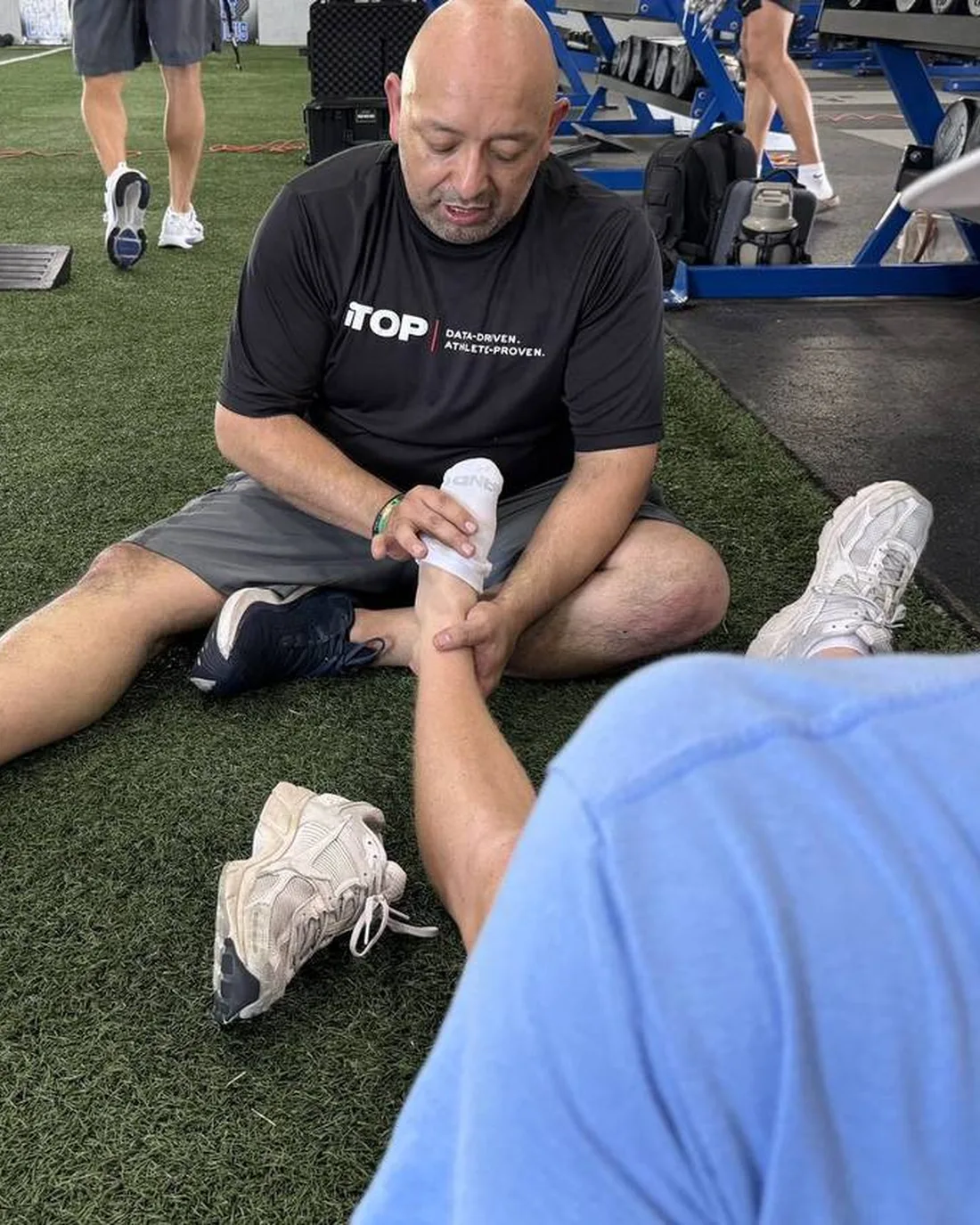
Placeholder. Procedure photo from iTOP Media.
The technique
What it is
IASTM stands for instrument-assisted soft tissue mobilization. Instead of using only their hands, your clinician works on the tissue with a smooth, blunt stainless-steel tool. The tools are not sharp. A lotion or gel is usually applied so the tool can glide.
The tissue being treated can include muscle, the connective tissue around it (fascia), tendon, or ligament, and it may include areas of scar after an injury or surgery. Your clinician chooses the tool, the angle, and the pressure based on your exam and on what you can tolerate.
IASTM is often compared with cupping, which we also use. Cupping uses suction to lift tissue. IASTM uses a tool to apply targeted pressure and strokes. Both may help with tightness, where appropriate, and both are typically combined with movement. Your clinician chooses the approach that fits.
It is a hands-on technique inside a physical therapy plan, not a stand-alone fix, and not a promise to "break up" tissue.
IASTM is available at all three iTOP clinics: Lubbock, Colleyville, and Irving. Your clinician will decide whether it is appropriate for you.
In plain words
How it works
After an injury, surgery, or a long stretch of overload, soft tissue can feel tight, sensitive, or restricted. Scar tissue can form as part of normal healing. Sometimes that area does not move as freely as you need it to for your sport.
The tool lets your clinician focus pressure in a way that can be more specific than a hand alone. The strokes may increase local blood flow and may make the area feel less tight. Some clinicians also use IASTM to help a scar move more freely. Research on IASTM is mixed, so we are careful in how we describe it. It may help with comfort and motion for some people, especially when it is paired with exercise. It is not a guaranteed way to change tissue, and it does not replace strengthening.
The useful part, when it helps, is often what you can do afterward: stretch, load, and practice the movement your sport demands, with a little less guarding.
Your visit
What to expect
A typical sequence. Your clinician may adjust the order or skip a step based on your exam. There is no fixed script for every visit.
-
Exam and screening
Your clinician checks the area and reviews your history. Tell them if you take blood thinners, have a bleeding or clotting disorder, have reduced sensation, have an open wound, infection, or rash, have an unhealed or unstable fracture, have a suspected blood clot, or have had recent surgery. Allergies to lotions or metals are also worth mentioning.
-
The skin is prepared
A lotion or gel is applied so the tool glides. You will be positioned so the muscle or tendon can be treated comfortably.
-
The tool is used
Your clinician moves a smooth stainless-steel tool over the area, with pressure and a pace that should be tolerable. You may feel scraping, pressure, or a scratching sensation on the skin, and the area may turn red. It should not be a sharp or severe pain. Tell your clinician if you need less pressure.
-
You move afterward
IASTM is typically followed by stretching, strengthening, or the movement you are working on. That combination is the point. The tool work is meant to support the exercise, not replace it.
-
After you leave
Redness is common. The area may feel sore, similar to after a firm massage, and a mild bruise can appear. This is not a goal and not proof that the treatment "worked." Contact the clinic if bruising is severe, if the skin is broken, or if symptoms worsen in a way that worries you.
Healing and recovery
How it may help
IASTM may help with the feeling of tightness and may support comfort and range of motion, where appropriate. It is often considered for tendon problems, muscle strains, areas that feel restricted after a sprain, and scars that limit motion after surgery.
For athletes, that can mean a calf or Achilles that moves more freely, a forearm that is irritable from repeated gripping, an IT-band or plantar-fascia area that has been limiting running, or a shoulder or elbow that feels tight during court sports. These are examples, not a list of guaranteed results.
Because the research is mixed, we treat IASTM as an option, not a required step. Exercise and loading remain the core of most plans. If it does not help your motion or comfort, your clinician will adjust.
Is this for you?
Who it helps
Athletes and active adults with tight or sensitive soft tissue, tendon irritation, muscle strains, or scars that limit motion, when your clinician thinks a tool-based approach may help. It may be part of care for running-related tightness, court-sport arm and shoulder issues, football lower-leg and thigh strains, or post-operative scar mobility, where appropriate.
It is not a fit over open wounds, unhealed fractures, infected skin, or certain vascular conditions, and it is used carefully if you take blood thinners. Your clinician will decide.
Please read
Safety and side effects
IASTM is generally safe for most people when a clinician applies it and screens you first. The most common effects are redness, temporary soreness, and occasional mild bruising. The skin can be irritated. Bruising is not something we aim for.
It should not be used over open wounds, unhealed stitches, skin infections, unhealed or unstable fractures, a suspected blood clot, or certain vascular conditions. Tell your clinician if you take blood thinners, have a bleeding disorder, have reduced skin sensation (including from diabetic neuropathy), have active cancer, or had recent surgery. This is not a complete list.
If the pressure feels too strong, say so. Your clinician can ease off, change tools, or stop and use a different technique, including hands-on manual therapy or cupping, where appropriate.
FAQ
Common questions
IASTM is instrument-assisted soft tissue mobilization. Your clinician works on muscle, tendon, or other soft tissue with a smooth stainless-steel tool, usually with a lotion so the tool can glide. It is typically combined with exercise, where appropriate, and it is available at all three iTOP clinics.
You may feel firm pressure, a scraping or scratching sensation, and the skin often turns red. It should be tolerable, not sharply painful. Soreness afterward is common, and a mild bruise can appear. Bruising is not a goal and is not proof the technique worked. Tell your clinician if you need less pressure.
Cupping uses suction to lift soft tissue. IASTM uses a stainless-steel tool to apply targeted strokes and pressure. Both may help with tightness, where appropriate, and both are often combined with movement. Your clinician will choose the approach that fits your exam. You can also read our cupping questions on the FAQ page.
Tell your clinician if you take blood thinners, have a bleeding or clotting disorder, have an open wound or skin infection, have an unhealed fracture, have a suspected blood clot, have reduced sensation in the area, have active cancer, or had recent surgery. Your clinician will decide whether IASTM is appropriate.
Yes, where appropriate. IASTM is a hands-on technique inside a physical therapy plan, not a stand-alone treatment. The goal is to help you move and load the tissue better. Your clinician will decide how it fits the rest of your visit.
IASTM is available at all three iTOP clinics: Lubbock, Colleyville, and Irving. Your clinician will decide whether it is part of a given visit.

Next Step
Start with Assess.
An evaluation at our Lubbock, Colleyville, or Irving clinic. Personalized care focused on recovery, strength and performance. Wear comfortable clothes you can move in. Insurance at Colleyville and Irving; cash pay at all three clinics.